How Do You Choose the Right Private Label Period Underwear Supplier?
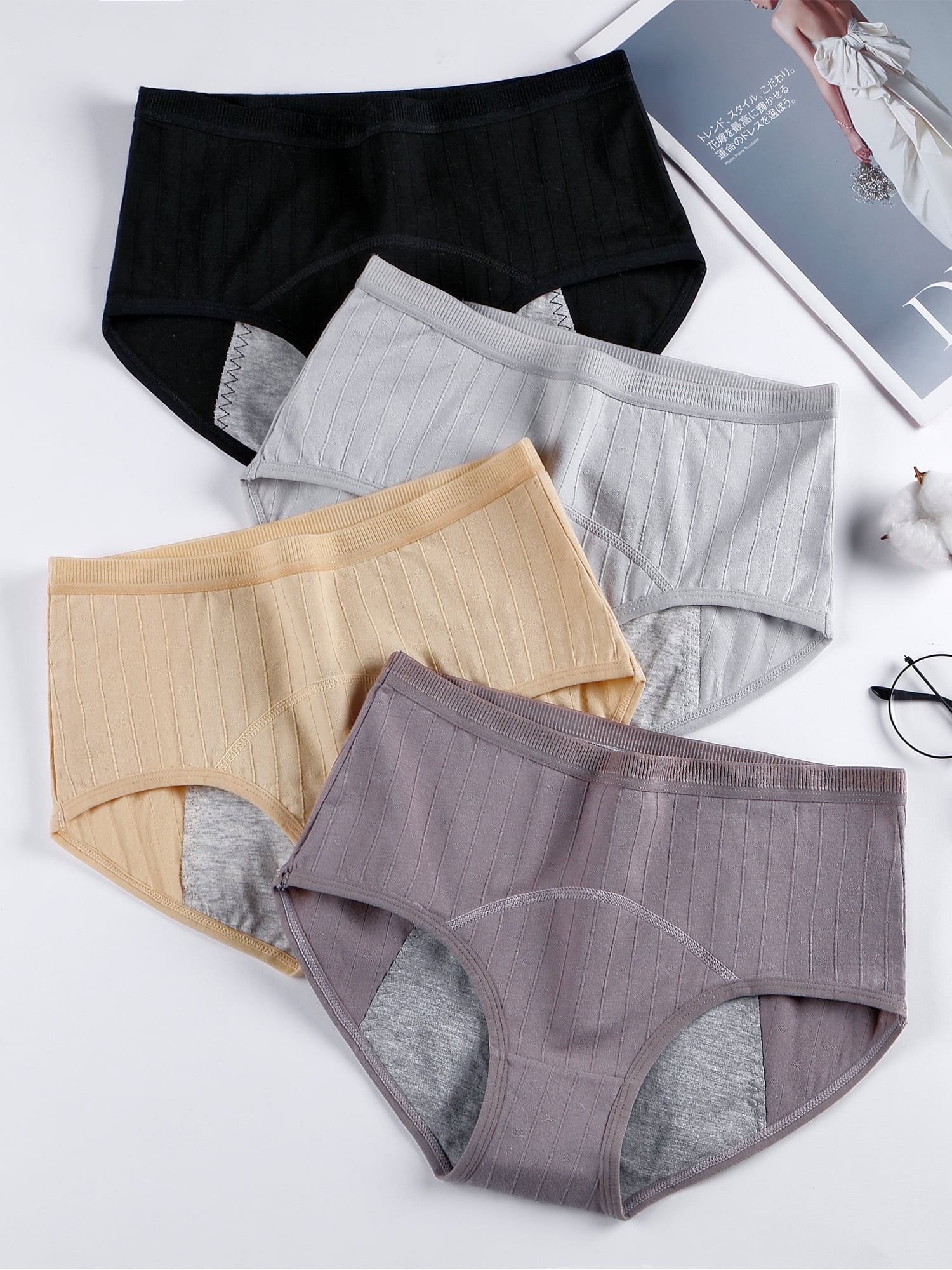
A good supplier should prove three things before receiving a production order: product performance, manufacturing consistency, and compliance. Start with absorbency testing, wash durability, fabric specifications, and size tolerances rather than unit price alone. For a first run of 1,000–3,000 pieces, compare at least 3 suppliers using the same tech pack, sample size set, packaging specification, and inspection standard. Request test reports dated within the last 12–24 months and confirm which materials were actually tested. A 5% lower unit price can disappear quickly if defect rates rise from 2% to 7%. Supplier capacity, MOQ structure, lead time, and repeat-order consistency should be reviewed before final approval.
For private label period underwear, the first comparison should be based on the finished product specification rather than a general quotation. Two factories can both quote a black high-waist brief, yet one may use a 180 GSM outer fabric with a shorter absorbent panel while another uses a 220 GSM fabric and extended rear coverage. A price difference of 8% may therefore reflect construction rather than efficiency. Ask every supplier to quote the same fabric composition, GSM, gusset dimensions, absorbency target, elastic width, size range, logo method, packaging format, and order quantity.
That specification should then move into physical testing because absorbency claims are difficult to compare from sales sheets alone. If a factory states 30 mL capacity, ask whether the figure comes from total saturation, controlled laboratory testing, or an internal water test. Test at least 5 samples from the same style and compare absorption speed, rewet, edge leakage, and performance under pressure. Repeat the test after 10, 20, and 30 wash cycles. A product that performs well when new but loses absorbency after 15 washes creates a very different customer experience from one that remains stable after 30.
Water resistance also needs separate testing because high absorbency does not guarantee low leakage. The waterproof layer can fail around needle holes, bonded seams, gusset edges, or areas where the membrane has been stretched during sewing.
Once basic performance is acceptable, compare the material package. Request fiber composition, fabric weight, stretch percentage, recovery, shrinkage, pilling results, and colorfastness data for the shell fabric, lining, absorbent layers, and waterproof membrane. A fabric listed as 95% cotton and 5% elastane tells you very little about how it behaves after repeated washing. If the waistband stretches 6% after 20 washes while another option stays within 2%, the second material may support more stable sizing even at a slightly higher cost.
Chemical documentation should be reviewed at the material level rather than accepted as a general factory statement. In the United States and European markets, brands commonly request test documentation covering restricted substances relevant to textiles, including formaldehyde, certain azo colorants, heavy metals, phthalates, and substances connected with specific product claims. Reports issued in 2025 or 2026 are more useful than documents from 2019 when materials, mills, or finishes have changed. Check the laboratory name, sample description, test date, tested color, and material composition before treating the report as applicable.
Supplier certificates also need to match the product being purchased. OEKO-TEX certification for one fabric does not automatically cover every elastic, printed label, membrane, dye, or finished garment used in the range. If a style contains 7 separate material components, request a bill of materials showing the source and specification of each component. Approval should be tied to named materials and approved suppliers, not only to the finished sample. Material substitutions should require written approval because a small change in membrane thickness or elastic composition can alter fit and leakage performance.
After materials are documented, move to sizing and grading. Period underwear depends on both garment fit and placement of the absorbent area, so checking only the waist and hip is not enough. Review waist, hip, front rise, back rise, leg opening, gusset width, gusset length, and stretch recovery. For a range from XS to 3XL, request at least 3 representative sizes rather than approving only M. If the 3XL body measurement increases 25% but the absorbent panel grows only 5%, coverage may not scale properly across the assortment.
Sampling should also show whether the supplier can follow revisions accurately. A practical development round may include a prototype, a revised fit sample, a size set, and a pre-production sample. Record every change in one controlled tech pack with version dates such as V1, V2, and V3. If a factory continues using an older waist measurement after V3 was approved, the issue is process control rather than sewing skill. Keep measurement tolerances clear; ±1 cm may be acceptable for some dimensions, while smaller components may require tighter limits.
Production consistency becomes more important once the approved sample is converted into 2,000 or 10,000 units. Ask how incoming fabric is inspected, how operators control gusset position, how often measurements are checked during sewing, and how final inspection is documented. A factory checking 5 garments at the end of a 5,000-piece order has far less information than one performing in-line checks throughout production. Request the supplier's inspection sheet and see whether it records defect type, size, production line, date, and corrective work.
A simple comparison table can make supplier differences easier to see:
| Area | Supplier A | Supplier B | Better Signal |
|---|---|---|---|
| Sample defect rate | 2% | 6% | A |
| Bulk MOQ | 1,000 pcs | 500 pcs | Depends on assortment |
| Production lead time | 35 days | 28 days | B |
| Wash test provided | 30 cycles | 10 cycles | A |
| Size range sampled | 4 sizes | 1 size | A |
| Material test date | 2026 | 2022 | A |
The table should not be scored by adding simple wins because some measures matter more than others. A 7-day lead-time advantage may be less important than a 4-point difference in defect rate. For a first order, product performance and consistency can reasonably represent 40%–50% of the internal supplier score, while price, lead time, MOQ, documentation, and communication make up the remaining percentage according to the brand's sales model.
MOQ should be checked by style, color, and size because a low advertised minimum can produce a much larger real order. A supplier offering 500 pieces may mean 500 per color. Four colors would then require 2,000 pieces before size allocation. If the launch uses 6 sizes, weak size planning can leave too much inventory in slower sizes. Ask whether colors can share fabric minimums, whether sizes can be mixed freely, and whether repeat orders can run below the first-order MOQ.
A lower MOQ is useful only when the price, material availability, and repeat-order process remain workable. A 300-piece trial order loses much of its benefit if the next production slot requires 70 days or the approved fabric cannot be reordered.
Capacity should therefore be checked before placing the trial order. Ask for monthly output for the relevant product category, not total factory output. A factory producing 500,000 ordinary underwear pieces per month may still have limited capacity for laminated menstrual products. If your forecast could increase from 3,000 to 15,000 pieces within 12 months, ask how much capacity can be reserved, whether extra sewing lines are available, and which processes are subcontracted.
Subcontracting should be documented because lamination, printing, cutting, sewing, and packaging may happen at different locations. Outside processing is common in apparel manufacturing, but the supplier should be able to identify where each stage occurs and how quality is checked. If waterproof lamination is outsourced, ask how incoming laminated fabric is tested before cutting. A failure found after 8,000 garments have been sewn is much more expensive than a failure found at incoming-material inspection.
Lead time should be separated into material preparation, production, inspection, and shipping preparation. A stated 30-day production lead time may begin only after fabric, labels, packaging, and deposit are ready. Custom-dyed fabric can add 15–30 days depending on mill schedules and order size. Printed packaging may run on a different timeline. Ask the supplier to provide a dated production schedule so the planned shipping date is connected to actual milestones rather than a general estimate.
Price should be reviewed after the technical comparison, not before it. If one quotation is $4.20 and another is $4.55, the difference is about 8.3%. That gap may be reasonable if the higher-priced supplier includes stronger elastic, longer absorbent coverage, better packaging, lower MOQ, and more testing. Calculate landed cost using product price, inspection, testing, freight, duty, packaging, payment charges, and expected defect allowance. A 3% quality issue on 10,000 units affects 300 pieces before customer-service costs are considered.
Payment terms also show how commercially prepared the supplier is. Common structures may involve a deposit followed by balance payment before shipment, although terms vary by supplier and order history. Confirm the registered company name, beneficiary account, production address, invoice details, and purchase agreement before transferring funds. If the bank beneficiary changes shortly before payment, verify the request through an established contact channel rather than relying only on one email.
Before shipment, inspect the bulk order against the approved sample and signed specification. For larger orders, third-party inspection can cover workmanship, measurements, packaging, quantities, labeling, and selected functional checks. Use a written defect classification and acceptance rule rather than statements such as “good quality.” If an order contains 6 sizes and 4 colors, the inspection sample should include a spread across the assortment rather than concentrating on one carton.
The first order should then be treated as a production test rather than proof of long-term performance. Record actual lead time, inspection results, shortage rate, measurement variation, packaging errors, and customer returns. If 2,000 units produce 40 product-related returns, the rate is 2%; if 140 units are returned, it is 7%. Compare the return reasons with production records before the next order. Leakage, sizing, seam failure, delamination, and waistband problems should be tracked separately because each points to a different manufacturing cause.
A supplier that performs well across 2–3 consecutive production runs gives much stronger information than one excellent prototype. Repeat orders reveal whether the factory controls materials, grading, operator training, packaging, and scheduling over time. Keep approved samples, color standards, test reports, measurement charts, and packaging references attached to every reorder. For a growing private label period underwear program, consistent repeat production usually matters more than saving a few percentage points on the first quotation.